
Practice Guide · 9 min read ·
Kapalbhati Pranayama: How to Do It, Benefits and Who Should Avoid It
A step-by-step guide to Kapalbhati, what the research really shows, how many strokes to start with, and the conditions where you should not do it.

Quick answer
Kapalbhati is a breathing practice of short, forceful exhalations through the nose, with each inhalation left to happen on its own. Beginners should start with two or three rounds of 15 to 20 strokes, on an empty stomach, resting between rounds. Do not practise it with high blood pressure, heart disease, hernia, epilepsy, vertigo, during pregnancy or soon after abdominal surgery.
What is Kapalbhati?
Kapalbhati, written Kapalabhati in older texts, joins two Sanskrit words: kapala, the skull, and bhati, to shine. It is usually translated as skull-shining breath. The Hatha Yoga Pradipika lists it among the six cleansing practices, the shatkarmas, rather than with the main breathing techniques.
The technique is simple to describe. You breathe out sharply through the nose by pulling the lower belly in, then relax the belly and let the next breath arrive by itself. The exhale is active and the inhale is passive. That reversal of normal breathing is what makes it feel strange at first, and what makes it more demanding than it looks.
In India it is one of the most widely practised breathing techniques, helped along by television yoga programmes. It is also one of the most often overdone.
How do you do Kapalbhati step by step?
Practise on an empty stomach, ideally in the morning and at least three hours after a full meal. Sit on a folded blanket or a chair so your spine stays upright without effort.
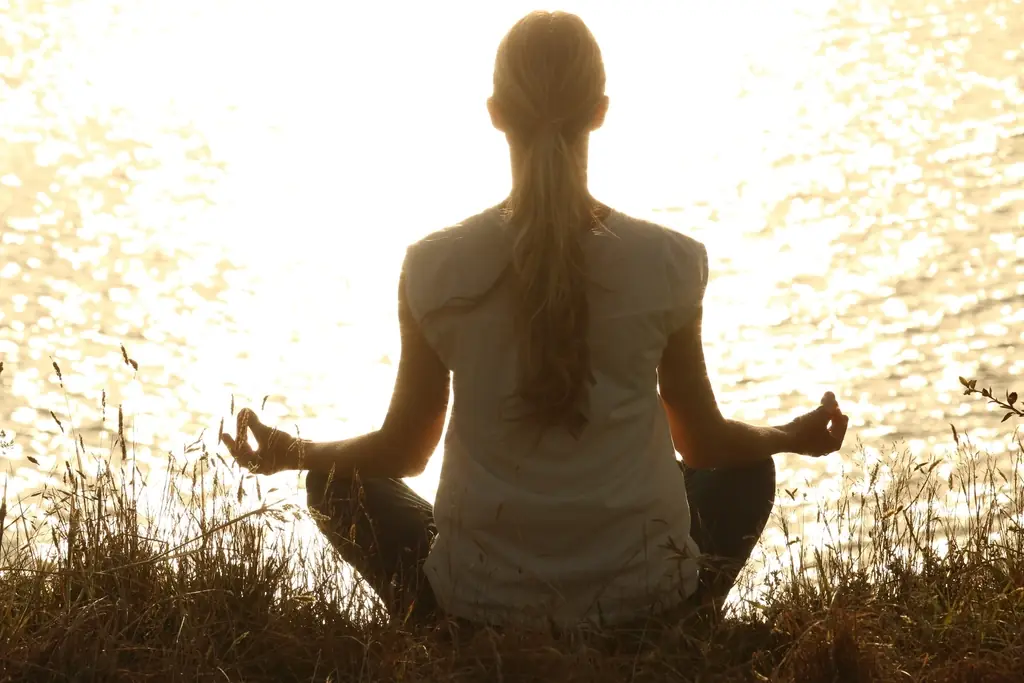
- Sit tall with your hands resting on your knees and your shoulders relaxed. Close your eyes or keep a soft gaze on the floor.
- Take two or three slow, ordinary breaths to settle.
- Breathe in gently, then breathe out sharply through the nose by drawing the lower belly towards the spine. The exhale is short and audible.
- Release the belly. Air flows back in without you pulling it, so do not try to take a big breath.
- Repeat at a steady pace of about one stroke a second. Keep the chest and shoulders still; the movement comes from the abdomen.
- After 15 to 20 strokes, stop and breathe normally for at least 30 seconds, or until your breathing has fully settled.
- Do two or three rounds in total, then sit quietly for a minute before getting up.
How many strokes should a beginner do?
Fewer than most videos suggest. The aim in the first weeks is clean technique: a crisp exhale, a relaxed inhale and still shoulders. Speed and volume can come later, if at all.
Some popular routines recommend ten or fifteen minutes of continuous Kapalbhati. There is no good evidence that more is better, and the chance of dizziness, strain and other side effects rises as the practice gets longer and faster. If you feel lightheaded at any point, stop the round and breathe normally. Lightheadedness means you are breathing too fast or too hard, not that the practice is working.
| Stage | Strokes per round | Rounds | Pace |
|---|---|---|---|
| Weeks 1 to 2 | 15 to 20 | 2 | About one per second |
| Weeks 3 to 6 | 20 to 30 | 2 to 3 | About one per second |
| After 6 weeks, if comfortable | 30 to 50 | 3 | Faster only if the technique stays clean |
What are the benefits of Kapalbhati?
The honest answer is that the research is thin. Most studies are small, short and carried out on healthy young volunteers.
In one study at JIPMER, Puducherry, 60 healthy volunteers were randomised to six weeks of Kapalbhati or no practice, and the Kapalbhati group improved on standard lung-function tests. A separate study of 50 volunteers found that heart-rate variability shifted during the practice and then moved towards a calmer pattern after 20 minutes of rest.
What people commonly report is simpler: feeling alert, clear-headed and warm. Those are reasonable reasons to practise. Curing disease is not one of them, and no study has shown that it does.
- A more awake, alert feeling after practice
- Better awareness and control of the abdominal muscles
- A useful warm-up before slower breathing or meditation
- Possibly stronger breathing muscles, based on small studies
Does Kapalbhati reduce belly fat?
This is one of the most common claims, and it is not supported. The abdominal muscles work hard during Kapalbhati, but working a muscle does not burn the fat lying over it. Studies of abdominal exercise have repeatedly found that training the stomach muscles does not selectively reduce stomach fat.
Kapalbhati also burns very few calories compared with walking or a flowing yoga class. If a smaller waist is your goal, overall activity, sleep and food habits matter far more. Our guide on whether yoga can reduce belly fat covers what actually works.
Who should not do Kapalbhati?
Guidance published under the Ministry of AYUSH advises against Kapalbhati for people with the conditions below. Treat this as a firm stop rather than a suggestion, and ask your doctor if you are unsure whether it applies to you.
- Heart disease, or a past heart attack or stroke
- High blood pressure
- Vertigo, giddiness or a tendency to faint
- Epilepsy
- Migraine
- Hernia, including umbilical and inguinal hernia
- Gastric or peptic ulcer
- Frequent nosebleeds
When else should you skip it?
There is a published case of a healthy 29-year-old woman who developed a collapsed lung after practising Kapalbhati, reported in the journal Chest in 2004. It is a single, rare case, but it makes the point its authors drew: pushing the body to physiological extremes carries risk.
- During pregnancy, when strong, repeated abdominal contractions are not appropriate
- On heavy or painful days of your period, if it feels uncomfortable
- After recent abdominal, chest or eye surgery, until your surgeon clears you
- With a lung condition such as COPD, or a past collapsed lung
- When you have a cold, a blocked nose or a fever
- Within three hours of a meal
What are the signs you are doing it wrong?
Stop and breathe normally if any of these appear. If chest pain, breathlessness or a racing heart has not settled within a few minutes of rest, get medical help.
- Dizziness, a light head, or tingling in the hands or face
- A headache or pressure behind the eyes
- Pain in the lower back, chest or abdomen
- Shoulders lifting or the chest heaving with each stroke
- Gasping for air between strokes
Kapalbhati vs Bhastrika: what is the difference?
The two are often confused. In Kapalbhati only the exhale is forceful and the inhale is passive. In Bhastrika, the bellows breath, both the inhale and the exhale are forceful and equal, which makes it more intense again. Bhastrika carries the same cautions and is best learnt only after Kapalbhati is comfortable, with a teacher.
Many routines follow Kapalbhati with Anulom Vilom, slow alternate nostril breathing, which brings the breath back down. That pairing makes sense: an activating practice first, a calming one after.
Where does Kapalbhati fit in a practice?
It works best early in a session, after a few minutes of gentle movement and before slower breathing or meditation. It is a poor choice in the evening if you have trouble sleeping, because it tends to leave people alert.
On days when you feel unwell, tired or anxious, leave it out. A calmer practice such as slow breathing with a long exhale will do more for you on those days.

Learning Kapalbhati with a teacher
Kapalbhati is easy to get roughly right and surprisingly easy to get wrong. The common errors, pumping the chest, forcing the inhale and going too fast, are hard to notice in yourself and easy for an instructor to see.
In the Meditation and Pranayama class at Daksh Yogalay, breathing techniques are introduced one at a time after a short conversation about your health, so you are not handed a forceful practice that does not suit you. The studio is on Hoshangabad Road, Bhopal, and your first class is free.
Frequently asked questions
Can I do Kapalbhati every day?
Yes, if none of the conditions that rule it out apply to you and you keep it short. Two or three rounds in the morning is a reasonable daily practice. Daily does not mean long: the habit matters more than the number of strokes.
What is the best time to do Kapalbhati?
Early morning on an empty stomach. Avoid it within three hours of a meal and late in the evening, since it tends to leave people alert rather than ready for sleep.
Is Kapalbhati safe for high blood pressure?
No. Guidance under the Ministry of AYUSH lists high blood pressure among the conditions where Kapalbhati should be avoided. Slow breathing with a longer exhale, or Anulom Vilom without breath retention, are better choices. Check with your doctor first.
Can I do Kapalbhati during periods?
Many teachers advise skipping it on heavy or painful days because of the strong abdominal contractions. If you feel fine, a few gentle rounds are a personal choice. Slow breathing is a comfortable alternative on those days.
Can Kapalbhati cure diabetes or thyroid problems?
No study has shown that it does. Claims that Kapalbhati cures diabetes, thyroid disease or other conditions are not supported by evidence. Breathing practice can sit alongside medical care, not replace it.
How long does it take to learn Kapalbhati?
Most people get the basic movement in a session or two. A clean, relaxed technique, with the chest and shoulders still, usually takes a few weeks of regular practice and some feedback.