
Practice Guide · 9 min read ·
Anulom Vilom: How to Do Alternate Nostril Breathing Properly
The hand position, the counts, the ratio to work towards, and the small mistakes that make alternate nostril breathing harder than it needs to be.
Quick answer
Anulom Vilom is alternate nostril breathing: you breathe in through one nostril and out through the other, using the right hand to close each side in turn. Start with equal four-count breaths for five minutes a day, then let the exhale grow longer. Small trials suggest it can modestly lower blood pressure, but it does not replace medication.
What is Anulom Vilom?
Anulom Vilom, or anuloma viloma, means roughly with the grain and against the grain, a reference to the breath moving one way and then the other. You breathe in through one nostril, switch, and breathe out through the other.
It is often taught as the same practice as Nadi Shodhana, or channel cleansing. Some traditions use the two names for slightly different versions, with Nadi Shodhana sometimes including breath retention. For a beginner the difference does not matter, and the version in this guide uses no breath holding at all.
Unlike Kapalbhati, which is fast and forceful, Anulom Vilom is slow and quiet. That makes it one of the most widely suitable breathing practices, and a common way to finish a session.
How do you hold your hand?
The traditional hand position is Vishnu mudra, using the right hand. Fold the index and middle fingers into the palm, and keep the thumb, ring finger and little finger extended.
The thumb closes the right nostril. The ring finger, with the little finger resting beside it, closes the left. Press lightly on the soft part of the nostril, just below the bone, with only enough pressure to stop the air.
If your arm tires, support the elbow with your left hand or rest it on a cushion. If folding the fingers is uncomfortable, resting the index and middle fingers on the forehead between the eyebrows works just as well.
How do you do Anulom Vilom step by step?
Sit upright on a cushion or a chair, with the spine tall and the shoulders relaxed. Breathe through the nose throughout.
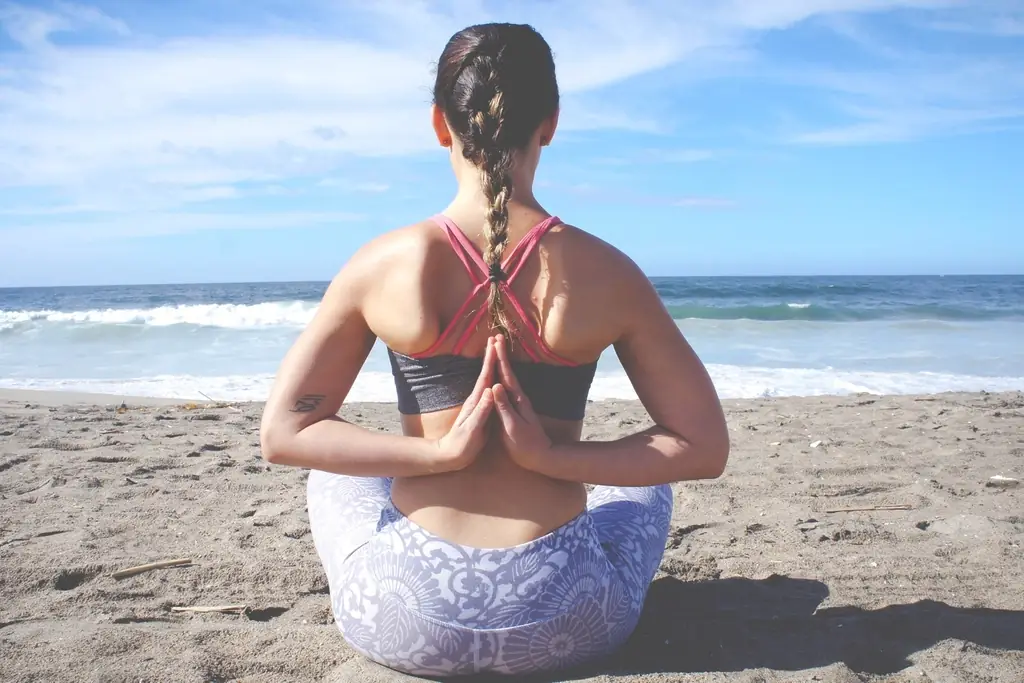
- Rest your left hand on your knee and bring your right hand into Vishnu mudra.
- Breathe out fully through both nostrils.
- Close the right nostril with your thumb. Breathe in slowly through the left nostril for a count of four.
- Close the left nostril with your ring finger and release the thumb. Breathe out through the right nostril for a count of four.
- Keeping the left side closed, breathe in through the right nostril for a count of four.
- Close the right nostril, release the left, and breathe out through the left for a count of four. That is one round.
- Continue for five minutes, then lower your hand and breathe normally through both nostrils for a minute before opening your eyes.
What counts should you use as you progress?
Start with an equal inhale and exhale. Once that feels easy and quiet, let the exhale grow longer than the inhale. A longer exhale is what gives the practice its calming effect, so this is the change worth working towards.
| Stage | Inhale | Exhale | Time |
|---|---|---|---|
| Weeks 1 to 2 | 4 counts | 4 counts | 5 minutes |
| Weeks 3 to 6 | 4 counts | 6 counts | 5 to 10 minutes |
| After 6 weeks | 4 counts | 8 counts | 10 to 15 minutes |
Should you hold your breath in Anulom Vilom?
Not as a beginner. Many traditional descriptions add kumbhaka, breath retention, after the inhale. Retention changes the practice considerably: it raises pressure in the chest and is not appropriate with high blood pressure, heart disease, glaucoma or during pregnancy.
Everything in this guide, including the research below, works without it. If you want to learn retention later, do so with a teacher who knows your health history.
What does the research say about Anulom Vilom?
More than for most breathing techniques, although the studies are mostly small. A 2024 meta-analysis pooled six randomised trials with 525 participants and found that alternate nostril breathing lowered blood pressure more than control conditions, by about 7 mmHg systolic and 5 mmHg diastolic on average.
The authors flagged large differences between the trials, so the true size of the effect is uncertain. An earlier systematic review of clinical trials found a similar pattern, with most studies reporting lower blood pressure and heart rate, and warned that study quality was uneven.
Other reported effects, on attention, anxiety and lung function, come from smaller studies again. A fair summary is that Anulom Vilom is a safe, calming practice with promising early evidence for blood pressure. It is a useful addition to treatment, not a substitute for it.
What benefits can you realistically expect?
Most people notice the first two within a session or two. The last depends on regular practice over weeks.
- A slower, calmer breathing pattern
- A simple tool for stressful moments that needs no equipment
- Better awareness of your breath and of which nostril is more open
- An easier transition into meditation or sleep
- Possibly a modest drop in blood pressure, based on small trials
What are the most common mistakes?
Almost every beginner makes a few of these. None is serious, and all of them make the practice harder than it needs to be.
- Breathing loudly or forcefully, when the breath should be close to silent
- Pressing the nostril so hard that the nose bends or the face tenses
- Lifting the shoulders on each inhale
- Rushing the counts instead of letting the breath fill the time
- Slumping, which squeezes the belly and shortens the breath
- Holding the breath at the switch without meaning to
- Practising with a badly blocked nose, which turns it into a struggle
When and where should you practise?
Morning and evening both work. In the morning, Anulom Vilom is a calm start to the day and a natural follow-up to Kapalbhati. In the evening it is one of the better practices to do before bed, because it slows the breath without stimulating you.
Practise on a fairly empty stomach, in a room that is not too hot or dusty. In Bhopal's summer an early start or a fan on low makes a noticeable difference; in winter, a shawl over the shoulders stops the body tensing against the cold.
Anulom Vilom vs Kapalbhati: which should you do?
They are often taught together, but they do opposite jobs. Kapalbhati is fast and activating; Anulom Vilom is slow and settling. If you can only learn one, learn Anulom Vilom first. It suits far more people, and it teaches the breath control that makes every other technique easier.
| Anulom Vilom | Kapalbhati | |
|---|---|---|
| Pace | Slow, about four to eight counts per breath | Fast, about one stroke per second |
| Breathing | Alternating nostrils, gentle in and out | Forceful exhale, passive inhale |
| Effect | Calming | Energising |
| With high blood pressure | Suitable, without breath retention | Not suitable |
| Best time | Any time, including before bed | Morning, on an empty stomach |
| For beginners | Yes, from the first class | After the basics, with guidance |
How do you know you are doing it right?
Good Anulom Vilom feels unremarkable while you are doing it and noticeably calmer afterwards. These are the signs that you are on the right track.
- The breath is quiet enough that someone beside you would barely hear it
- Your face, jaw and shoulders stay soft throughout
- The counts feel easy, with no gasping at the start of an inhale
- Your mind wanders less by the end than at the start
- You feel steady, not lightheaded, when you open your eyes
Is Anulom Vilom safe for everyone?
The version without breath retention is one of the gentlest practices in yoga and suits most people, including older adults and people with high blood pressure. Many pregnant women practise it without retention, but check with your doctor first and tell your instructor.
Stop if you feel dizzy, breathless or anxious, and return to normal breathing. If you take medicine for blood pressure, keep taking it, and mention your practice to your doctor, especially if your readings start to fall.
Learning Anulom Vilom at Daksh Yogalay
Anulom Vilom is easy to learn from a guide, and easier still with someone watching your hand and posture for the first few sessions. In the Meditation and Pranayama class at Daksh Yogalay, breathing techniques are introduced one at a time and practised slowly, with chairs and props used freely. The studio is on Hoshangabad Road, Bhopal, and the first class is free.
Frequently asked questions
How long should I do Anulom Vilom?
Five minutes a day is enough to start. Build up to ten or fifteen minutes over a few weeks if you enjoy it. A short daily practice does more than a long one done occasionally.
Can I do Anulom Vilom at night?
Yes. It is one of the better practices before bed, because it slows the breath without stimulating you. Keep it gentle and leave out breath retention.
Can Anulom Vilom reduce blood pressure?
Small trials suggest it can lower blood pressure modestly, by a few points on average. It should not replace medication. Keep taking any prescribed treatment and monitor your readings.
Is Anulom Vilom the same as Nadi Shodhana?
Mostly, yes. Both are alternate nostril breathing. Some traditions use the name Nadi Shodhana for a version that includes breath retention. For beginners, the version without retention is the one to learn.
What if one nostril is blocked?
Try clearing your nose gently first, or practise for a shorter time. If one side stays blocked, slow breathing through both nostrils is a better choice that day than forcing the technique.