
Practice Guide · 9 min read ·
Yoga for Better Sleep: A Simple Bedtime Routine
A quiet 15-minute routine for the hour before bed, what research says about yoga and sleep, and the habits that matter as much as the poses.
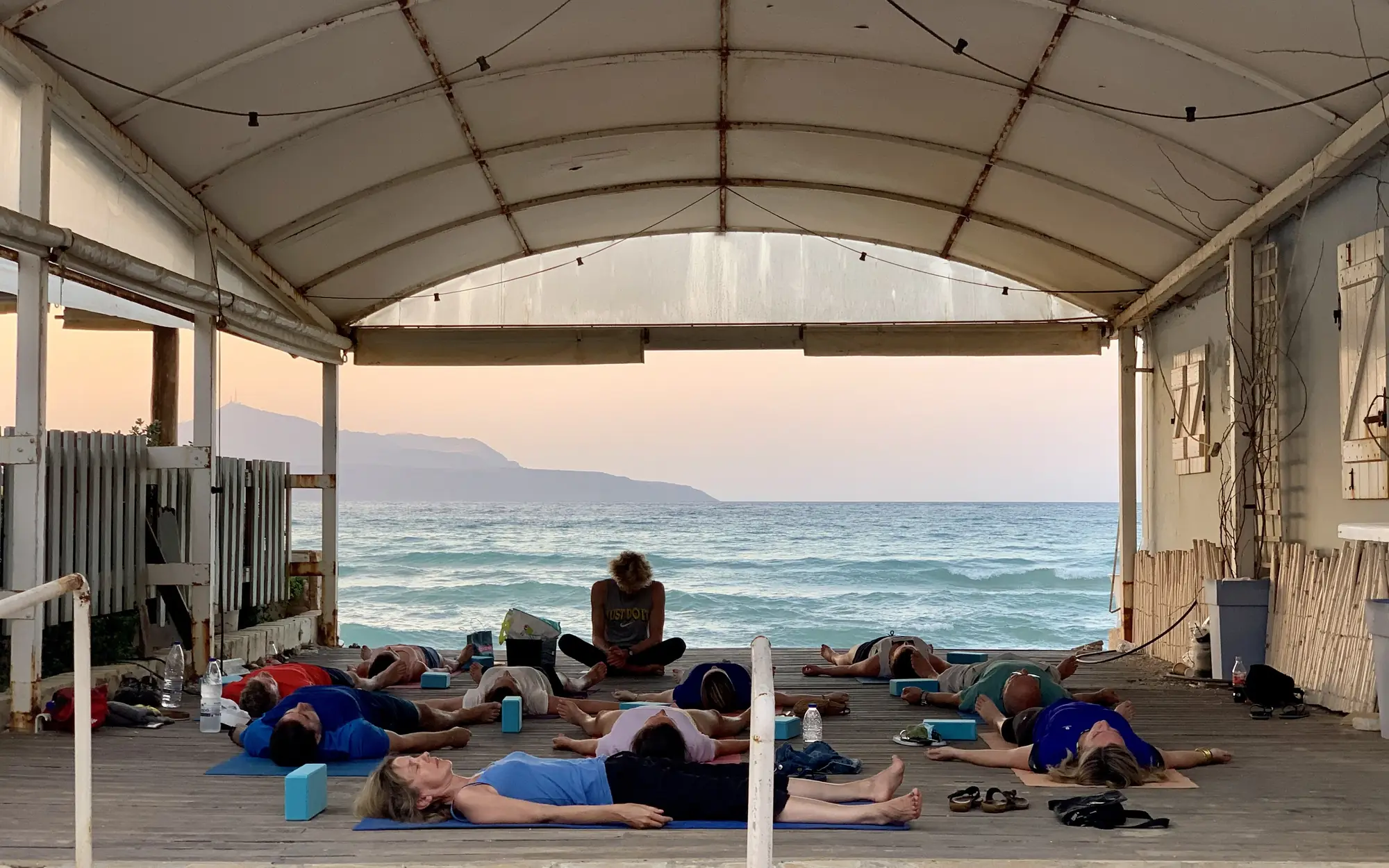
Quick answer
Gentle yoga before bed can improve sleep quality. A review of 19 studies found better sleep in women with sleep problems who practised yoga than in those who did not. The most useful bedtime practices are slow and quiet: child's pose, a lying twist, legs up the wall, humming breath and a body scan. Keep vigorous practice and fast breathing for the morning.
Can yoga help you sleep better?
For many people, yes. Poor sleep usually has more to do with a busy mind and a body that has not wound down than with anything dramatic, and that is exactly what slow, quiet yoga works on.
It is not a cure for every sleep problem. Long-term insomnia and sleep apnoea need proper assessment. But for the common pattern of lying awake with your thoughts, or waking unrefreshed, a short routine before bed is one of the simplest things to try.
What does the research say?
A 2020 review in BMC Psychiatry pooled 19 studies with 1,832 women who had sleep problems. Yoga improved sleep quality compared with no active treatment, although it did not show a clear effect on insomnia severity in the few trials that measured it.
Mindfulness meditation shows a similar pattern. A 2019 analysis of 18 studies with 1,654 participants found that it improved sleep quality more than education-based programmes.
Guidelines remain cautious. Relaxation therapy is conditionally recommended for chronic insomnia by the American Academy of Sleep Medicine, while one US clinical guideline found too little evidence to recommend for or against yoga. The first-line treatment for chronic insomnia is a structured therapy called cognitive behavioural therapy for insomnia, or CBT-I. Yoga fits best as a way to wind down, alongside good sleep habits.
A 15-minute bedtime routine
Do this in comfortable clothes, in a dim room, about 30 to 60 minutes before you want to sleep. Move slowly and breathe through the nose. Nothing here should feel like effort.
- Seated breathing, 2 minutes. Sit on the bed or floor and breathe in for four counts and out for six.
- Neck and shoulder release, 2 minutes. Slow ear-to-shoulder tilts and shoulder rolls.
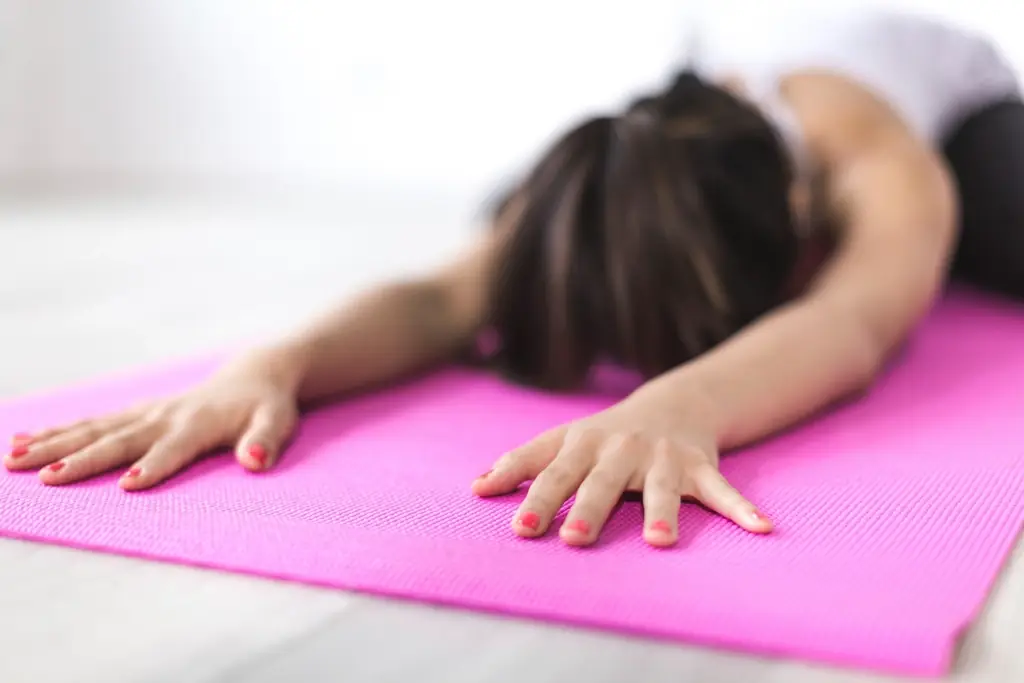
- Balasana, child's pose, 2 minutes. Knees wide, forehead on a pillow if it does not reach the floor.
- Supine twist, 2 minutes. Lying on your back, let both knees fall to one side, then the other.
- Viparita Karani, legs up the wall, 3 minutes, with a pillow under the hips if comfortable.
- Bhramari, the humming breath, 6 rounds. Breathe in, then hum softly through a long exhale.
- Body scan in Shavasana, 3 minutes or until you are ready to sleep. Move your attention slowly from the feet to the head.
Why these practices and not others?
Each one either lengthens the exhale or asks almost nothing of the muscles. A long, slow exhale is one of the most direct ways to shift the body out of its alert state, and supported, passive postures give the nervous system nothing to brace against.
The order matters too. The routine moves from sitting to lying down, and from gentle movement to stillness, so that by the end the step to sleep is a short one.
What should you avoid in the evening?
Some practices that are excellent in the morning work against you at night.
- Vigorous flows, Power Yoga and long runs of Surya Namaskar within two hours of bed
- Kapalbhati and Bhastrika, which are designed to energise
- Strong backbends, which tend to wake people up
- Practising on a full stomach; leave two to three hours after dinner
- Checking your phone between poses
- Treating the routine as a test you must complete
What is Yoga Nidra and how do you do it?
Yoga Nidra, often called yogic sleep, is a guided relaxation done lying in Shavasana. A teacher or recording leads your attention slowly around the body, then to the breath and to simple sensations such as heaviness and warmth. You stay still and follow the instructions without trying to achieve anything.
It is one of the easiest practices to start, because the guidance does the work for you. Sessions usually last 10 to 30 minutes. Practised during the day it is a deep rest; practised in bed, many people simply fall asleep partway through, which is a perfectly good outcome.
Which breathing practices help with sleep?
Two simple techniques are worth learning. Bhramari, the humming breath, means breathing in through the nose and humming gently as you breathe out. The hum naturally slows the exhale, and many people find the sound itself settling.
The second is a slow count: in for four, out for six or eight, for five minutes. If counting keeps you alert, drop the numbers and simply let each exhale be a little slower than the inhale. Anulom Vilom, without breath retention, is another good choice before bed.
Habits that matter as much as the poses
In Bhopal's summer months, a cool room is often the biggest single change you can make. A fan that moves air across the bed, light cotton bedding and a cool shower before your routine all help.

- Go to bed and get up at about the same time every day, weekends included
- Get daylight in the first hour after waking; it helps set your body clock
- Keep caffeine, including tea, to before early afternoon
- Eat dinner two to three hours before bed
- Keep the bedroom cool, dark and quiet
- Put screens away for the last 30 to 60 minutes
Does morning yoga help you sleep at night?
Regular daytime activity is linked to better sleep, and morning practice has an extra advantage: it gets you up at a fixed time and into daylight early. If you join a 5:00 AM batch, aim to be asleep by about 10 PM so the early start does not cost you sleep.
Morning is also the right time for the energising practices that do not belong at night, such as a flowing sequence or Kapalbhati, if they suit your health.
What if you wake at night and cannot get back to sleep?
Leave the phone where it is and stay in the dark. Lying on your back, breathe slowly with a longer exhale, or move your attention through the body as you would in a body scan. Many people drift off again within a few minutes once they stop trying to.
If you are still wide awake after what feels like twenty minutes, get up, sit somewhere dim and quiet, and do something calm until you feel sleepy, then go back to bed. Lying awake for long stretches teaches the brain to link the bed with being awake, which is the pattern that structured insomnia treatment works to undo.
How long until it works?
Some people sleep better from the first night, often because the routine replaces time on the phone. For a fair test, give it two to three weeks of nightly practice and keep a short sleep diary: when you went to bed, roughly when you fell asleep, and how rested you felt in the morning.
If nothing has changed after a month of steady practice and good habits, that is useful information in itself, and a good reason to talk to a doctor.
When does poor sleep need a doctor?
These can point to conditions such as sleep apnoea, chronic insomnia or depression, which need proper assessment. Yoga can sit alongside treatment, but it is not a substitute for it.
- Loud snoring, gasping, or pauses in breathing that someone else notices
- Feeling very sleepy during the day despite enough time in bed
- Trouble sleeping three or more nights a week for three months or longer
- Restless, uncomfortable legs in the evening
- Sleep problems alongside low mood, anxiety or worry that does not let up
Learning at Daksh Yogalay
The Meditation and Pranayama class is the most direct fit for sleep, teaching short breathing and relaxation practices you can repeat at home. A gentle Hatha class is a good companion to it. The studio is on Hoshangabad Road, Bhopal, and the first class is free.
Frequently asked questions
Which yoga pose is best for sleep?
Viparita Karani, legs up the wall, and Balasana, child's pose, are two of the most useful. Both are passive and easy to hold. Pair them with slow breathing and a body scan.
Can I do yoga in bed before sleeping?
Yes. Gentle stretches, a lying twist, slow breathing and a body scan all work on the bed. Keep it slow and avoid anything that raises your heart rate.
Is Yoga Nidra good for sleep?
Yoga Nidra is a guided relaxation done lying down, and many people find it helps them fall asleep. Research on relaxation and meditation shows benefits for sleep quality, although studies on Yoga Nidra itself are small.
Should I do yoga in the morning or at night for better sleep?
Both help in different ways. Active practice belongs in the morning and slow, quiet practice suits the evening. A regular morning practice also helps fix your wake-up time.
How long before bed should I do yoga?
About 30 to 60 minutes before you want to sleep, and two to three hours after dinner. Fifteen minutes of practice is enough.